Clear warnings help people act before hypertension becomes a lifelong illness

South Africa is facing a growing burden of hypertension and other non-communicable diseases,  Ahead of World Hypertension Day, HEALA is calling for stronger food labelling policies, including clear and effective front-of-pack warning labels, to help consumers make informed choices and reduce excessive salt consumption.

Hypertension, commonly known as high blood pressure, remains one of the leading risk factors for heart disease, stroke, kidney disease, and premature death in South Africa. Despite ongoing public awareness campaigns, many consumers still struggle to identify foods high in salt, sugar, and unhealthy fats due to complicated nutrition labels and misleading marketing on packaged foods.

Front-of-pack warning labels offer a practical, evidence-based solution. By placing simple to read, highly visible warnings on products that contain excessive levels of nutrients linked to poor health outcomes, such as sodium, these labels empower consumers to make healthier choices quickly and confidently.

South Africa has already demonstrated leadership in public health through progressive policies such as salt reduction regulations.  In 2023 government released for public comment the R3777 Regulations Relating to the Labelling And Advertising of Food Stuff, in acknowledgement of the fact that  stronger consumer information tools are needed to improve the overall health of South Africans, particularly as processed and ultra-processed foods become more common in household diets.

Three years later the regulations have yet to be implemented. 

Research from countries like Chile, that have implemented front-of-pack warning labels shows that these measures can influence purchasing decisions, encourage manufacturers to reformulate products, and improve public understanding of nutrition risks.

South Africa has low nutrition label literacy. A 2011 study in the North West reported that “respondents did not always understand how to use the information on food labels in order to make informed food choices. When scientists quizzed study participants on how well they understood labels, test scores revealed that even frequent readers did not always understand how to use labels to make better food choices.

For South Africa where hypertension affects millions of adults and increasingly impacts younger populations pack warning labels represent an important opportunity to strengthen prevention efforts, reduce healthcare costs, and protect future generations.

HEALA is urging policymakers to ratify mandatory front-of-pack warning labels as part of a comprehensive strategy to combat hypertension and improve nutrition across the country. 

South Africans have a right to know what is in their food. Clear warning labels are not just about information they are about prevention, empowerment, and saving lives.

Confronting diabetes: South Africa’s urgent call for action following Johannesburg Declaration

Confronting diabetes: South Africa’s urgent call for action following Johannesburg Declaration

Johannesburg-15 April 2026- In a pivotal move toward addressing the escalating diabetes crisis in South Africa, the Healthy Living Alliance (HEALA) convened yet another dialogue focused on the challenges faced by the nation’s more than 4 million diabetic population.


This discussion followed the recent finalisation of the Johannesburg Declaration for Accelerated Action on Diabetes and served as a platform to galvanise public and media awareness around this pressing public health issue.


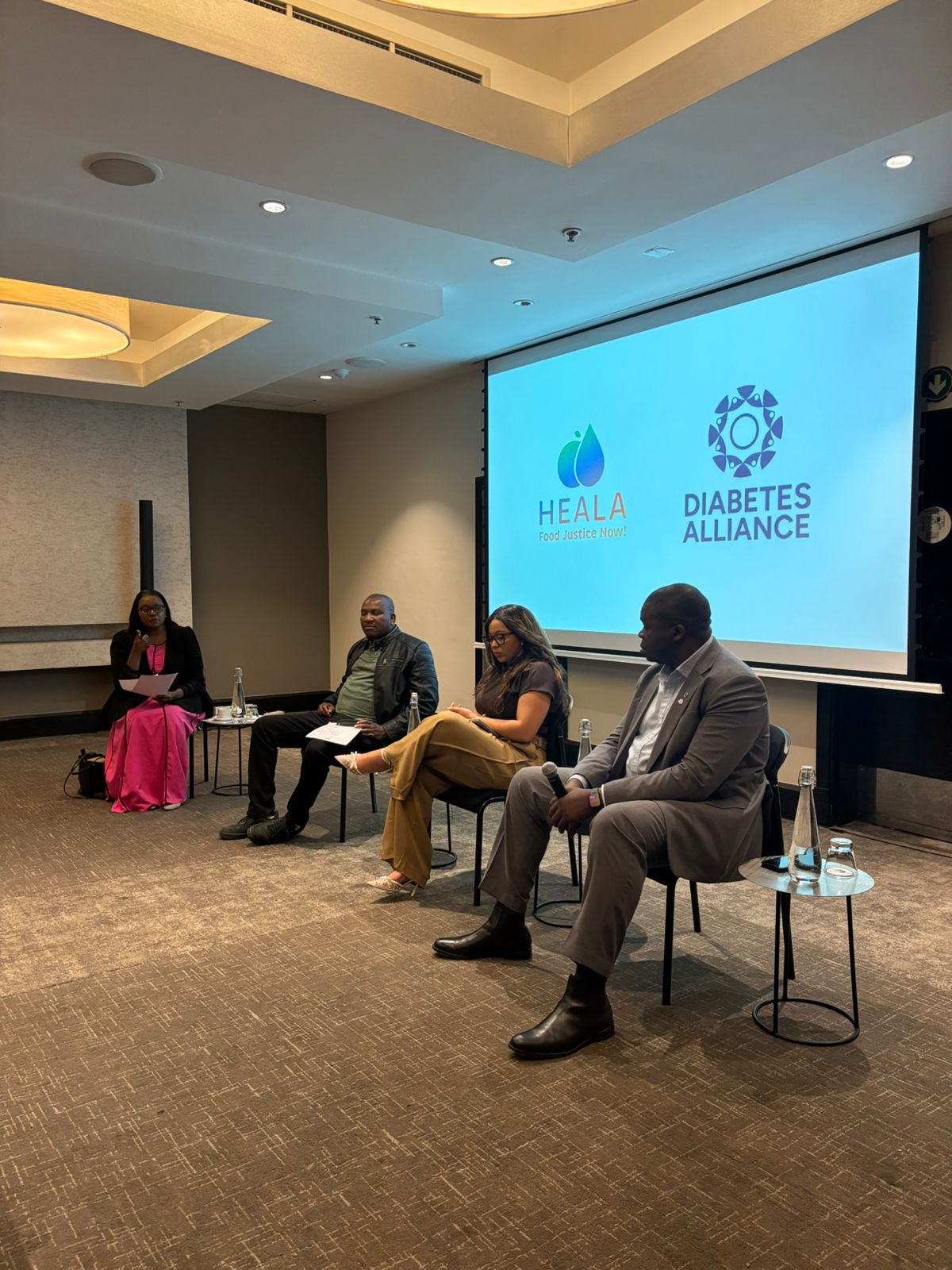
Held at the Southern Sun Hotel in Rosebank, the media breakfast event featured a dynamic panel discussion led by SABC anchor Bongiwe Zwane, alongside HEALA’s CEO, Nzama Mbalati, Dr Patrick Ngassa Piotie, Chairman of the Diabetes Alliance, as well as one of South Africa’s leading diabetes activist, Amanda Mashego.


These experts and stakeholders gathered to deliberate on the widespread implications of diabetes, which is increasingly cited as one of the world’s leading non-communicable diseases (NCDs).
Mbalati, emphasised the vision outlined in the Johannesburg Declaration – a commitment to ensuring that every South African, irrespective of income, geography, gender, or health status, has access to equitable diabetes prevention and care.


“Following last year’s Diabetes Summit, we want to keep the momentum going. The commitments made in the declaration must not be allowed to gather dust,” Mbalati asserted.
Mbalati further highlighted the need for collective society efforts, from government to academia, to confront the diabetes crisis decisively.


Yet despite years of advocacy, government policies and interventions still lag significantly. Experts attending the panel highlighted the urgent need for greater empowerment and support for individuals living with diabetes, with Dr Ngassa Piotie, pointing out that the education given to medical students is inadequate when it comes to understanding the complexities of diabetes management. “There is a danger that we may repeat the same mistakes we made with HIV/Aids treatment. We need to empower communities and ensure that the next generation of healthcare professionals is well-equipped to manage diabetes,” laments Dr Ngassa Piotie.

While there has been a notable decrease in diabetes-related fatalities, from 95,000 in 2021 to just over 24,000 in 2024, the burden of diabetes continues to escalate, posing significant threats to public health and economic stability in South Africa. Both Dr Ngassa Piotie and Mashego, whose diagnoses in 2020 spurred her to take a keen interest in advocacy work, echoed the sentiment shared by other panelists that more proactive measures and education are vital.

Despite having found new and innovative ways to contribute positively to the discussions around diabetes, Mashego expressed her frustration over the lack of support available to young individuals living with diabetes.

“Sometimes I wonder what the future looks like for young people. I am angry, and my anger stems from the fact that when I was diagnosed in 2020, I faced the most challenging time of my life. I had to educate myself in real time. Sometimes when young people contact me, I am confronted by the burdens they face daily,” she shared passionately.


Mashego reveals that she is particularly concerned about young individuals forced to navigate their diabetes journeys alone, often without adequate familial or governmental assistance.
Her experience mirrors a broader issue plaguing young diabetics—many find themselves self-educating on managing their condition amidst societal stigma. “I had to deal with nurses who would just give you insulin without explaining anything. Some nurses hand you a handful of insulin, and for the next six months, you have to figure things out by yourself. That is why I am angry due to the many unfulfilled government promises,” she lamented, illustrating the pressing gap in education and support within the healthcare system.

This conversation served not only as a forum for discussion but as a rallying cry for urgent collective action against diabetes in South Africa. As stakeholders continue to push for accountability and reforms, the impact of diabetes on individuals and the healthcare system remains a poignant reminder of the work yet to be done.

Mbalati further stresses the importance of active, rather than passive activism, which he says is needed to move the country and the government towards a more practical approach to stemming the tide against the diabetes scourge.

“We cannot accept being satisfied with doing the bare minimum. Another thing is the private sector. We keep talking about the public sector, but the private sector also has a role to play. Also, people living with diabetes need to have a seat at the table when policies are being developed,” Mbalati concludes

Glaring omission in Godongwana’s mid-term budget policy statement.

The Healthy Living Alliance (HEALA) is profoundly disappointed by the lack of mention of the Health Promotion Levy (HPL) in Finance Minister Enoch Godongwana’s mid-term budget policy statement. 

The South African government imposes taxes on certain products, such as alcohol and tobacco, to generate revenue and discourage consumption due to their negative health and societal impacts. Similarly, HPL aims to reduce the consumption of sugary drinks. However, unlike “sin taxes,” the HPL hasn’t seen a significant increase since its introduction in 2018, representing a potential missed opportunity for revenue.

The World Health Organisation has highlighted the importance of health taxes, noting that health taxes are a valuable tool for reducing disease burden and generating revenue. By implementing or increasing these taxes, governments can improve public health outcomes while securing funds for healthcare initiatives. 

South Africa is facing a dramatic increase in non-communicable diseases such as heart disease and diabetes. The overconsumption of sugary drinks has been linked to an increase risk of these illnesses. 

These taxes offer multiple benefits, including improved health outcomes, reduced consumption of harmful products, and increased revenue for healthcare. They can also be used to fund specific health initiatives, such as universal health coverage, increases in the child support grant and the expansion of the National School Nutrition Programme. 

It is unconscionable that the sugar industry continues to be coddled by the government, while calls for an increase in the HPL to protect the lives of South Africans go unheeded.

HEALA is calling for an increase to the HPL and the recognition of the levy as a necessary health tax for the good of all who live in South Africa. 

Ends.

For media enquiries please contact

Zukiswa Zimela HEALA Communications Manager

zukiswa[@]heala.org 0745210651

HEALA extends a warm welcome to the newly elected Health and Finance Ministers, Dr Aaron Motsoaledi and Mr Enoch Godongwana. 

In congratulating both Ministers, HEALA also urges them to prioritise the implementation of evidence-based policies that will address the triple burden of hunger, food insecurity, and obesity – and ultimately improve the health of ordinary South Africans. 

To date, South Africa faces alarming levels of hunger, food insecurity, and obesity stemming from a broken food system. Globally, ultra-processed foods high in salt, sugar, and fat are more available than ever before, particularly in low and middle-income countries such as South Africa. Diets high in these components significantly increase the risk of people developing non-communicable diseases (NCDs) such as obesity, high blood pressure, type 2 diabetes, and heart disease. 

According to Statistics South Africa, more and more people are dying from NCDs than ever before. Diabetes, hypertension, and heart disease rank among the top ten leading causes of natural deaths in South Africa, based on the latest figures from 2017.

“HEALA particularly wishes for the Health Minister, Dr Motsoaledi, to speed up regulation on food labelling to assist ordinary South Africans in making informed food choices, to initiate coordinated mechanisms and resource mobilisation towards government and civil society as well as support improvement of the school food environment, champion taxation and regulation of unhealthy products such as sugary drinks, tobacco and alcohol,” says HEALA CEO Nzama Mbalati. 

HEALA believes the government has ample evidence demonstrating the effectiveness of the Health Promotion Levy (HPL) and Front-of-Pack Warning Labels (FOPL) in addressing many of the health issues plaguing ordinary South Africans.

Previous HPL evidence has shown that public health policies, which increase the price of harmful products, can reduce consumption. However, there is potential to do even more. Government can allocate the funds generated from the levy towards addressing issues of hunger and poverty by increasing the Child Grant and subsidising healthier foods.  

HEALA calls on Finance Minister Mr Godongwana to protect the gains made by the levy by increasing it to 20%, and expanding it to include fruit juices. We also urge Health Minister Dr Motsoaledi to fast-track the implementation of easy-to-read warning labels and empower ordinary South Africans to make better food choices.

In South Africa, essential nutritional information is buried at the back of canned products, boxes, and bottles, making it difficult for consumers to read or decipher the food labels. Implementing front-of-package labelling can translate necessary nutritional information into simple language and prominently display it on the front of food products.

The FOPL regulation will also protect children from predatory marketing practices employed by food manufacturers who use fancy marketing strategies to seduce vulnerable children into being addicted to unhealthy food.

The South African health system is buckling under the weight of NCDs. Two years ago, researchers found that “overweight and obesity cost South Africa’s health system R33 billion (US$1.9bn) a year. This represents 15.38% of government health expenditure and is equivalent to 0.67% of GDP. Annual per person cost of overweight and obesity was R2 769”. The cost of inaction in addressing this issue for both the state and the individual is too high. 

 HEALA remains committed to holding government leaders accountable for their responsibility in ensuring that the food environment benefits ordinary people rather than industry profits.

We are calling on the newly elected ministers to put food justice on the political agenda and create a healthier, more equitable future for all South Africans.

“HEALA is confident in Dr Motsoaledi’s expertise, enthusiasm and the political will he demonstrated in his previous tenure as Health Minister,  during which he prioritised pivotal public health policies and initiatives aimed at improving the health of all South Africans,” concludes Mbalati. 

Ends.

About HEALA: HEALA is a coalition of civil society organisations advocating for equitable access to affordable, nutritious food in South Africa by building a more just food system.

For media interviews contact

Zukiswa Zimela | HEALA Communications Manager

zukiswa[@]heala.org

This World Obesity Day we urgently need to confront the scourge of non-communicable diseases (NCDs) in South Africa.

Deaths from non-communicable diseases (NCDs) are surging worldwide. In South Africa, deaths from NCDs increased by almost 60 percent from 1997 to 2018. Urgent action is needed. We know that we can’t solve the problem of NCDs with isolated, small and convenient interventions in individual lifestyles. The Healthy Living Alliance (HEALA) is calling for a package of bold interventions with a systemic overview of the issue of obesity.

Research shows that an estimated 1 in 8 South African children are overweight which is double the global average. Experts warn that children experiencing overweight and obesity in early childhood run the risk of experiencing obesity as adults. Obesity is associated with other dangerous diseases such as diabetes and heart disease.

One of the most urgent interventions needed to curtail the explosion of NCDs in South Africa is the regulation of the food environment. The government needs to strongly regulate the food environment in favour of consumers to curb the consumption of unhealthy food, which is often heavily marketed to South Africa’s poor.

HEALA is asking the government to urgently increase the Health Promotion Levy (HPL) on select sugar-sweetened beverages to 20 percent and include fruit juices in the HPL. Currently, the levy remains at a paltry 11% and has not seen a significant increase since it was introduced in 2018.

Secondly, the National Department of Health needs to speed up the adoption of effective front-of-package warning labels on unhealthy foods to help consumers make better choices and live healthier lives. Several studies have shown that people globally and in South Africa have trouble reading traditional nutritional labels.

“The food industry spends billions of rands every year to reach children with their product marketing. They also aggressively lobby against public health policies aimed at promoting good health. We know the food industry would not spend billions of Rands fighting public health interventions that are not effective,” says Acting Interim CEO Nzama Mbalati.

What we eat is one of the biggest contributors to obesity. According to this study, our modern diets of calorie-dense foods, sugar-sweetened beverages, and high-fat and high-carb foods have been linked to obesity.

“It is unfortunate that government perpetuates the notion that public health interventions should first and foremost have economic benefits. We believe that the people’s well-being and dignity should be enough of a reason to push forward with solid regulations,” Mbalati says.

Sporadic interventions on this issue will do nothing to bring us back from the brink of the NCD cliff, what we need are sustained, evidence-based actions that look at the entire food system and address all the systematic causes of obesity in the country.

ENDS

About HEALA:

HEALA is a coalition of civil society organisations advocating for equitable access to affordable, nutritious food in South Africa by building a more just food system.

For media interviews please contact 

Zukiswa Zimela Communications Manager HEALA

0745210652 | zukiswa@heala.org

OPINION: Let’s be upfront on front-of-pack labelling

By Nzama Mbalati and Zukiswa Zimela

It is really difficult to read food labels. What is trans-fat? How is it different from saturated fat? Why is sodium in milligrams instead of grams? Is it good for me?

That is, of course, if you even see the label on the back of the package.

On April 21, 2023, the National Department of Health published R3337, putting forward a draft regulation to introduce front-of-pack labelling in South Africa.

The draft regulation aims to provide easy-to-understand information on the front of packaged food to help consumers make healthy purchasing decisions.

This type of labelling has been incorporated successfully into several other countries and has been shown to help consumers better understand what they are eating.

The draft regulations also propose introducing restrictions on how foods can be marketed when those foods are deemed unhealthy.

The restrictions specifically aim to restrict techniques used to entice children to purchase and eat unhealthy food – an important measure as children are more vulnerable to persuasive marketing practices.

The draft regulation seems to be a no-brainer: more people will understand what is in food, and children will be less likely to be manipulated into making unhealthy eating decisions.

Especially in light of the worrying revelation early last week by Statistics South Africa that non-communicable diseases – diseases often associated with poor diets – have increased by 58 percent in the last two decades.

However, there has been staunch opposition from the food industry, and several red-herring arguments have been advanced.

We provide the following clarification to help the public understand the new proposed draft regulations.

Food producers will have fair use of their trademarks

The food industry argues that the restriction in the regulations aimed to remove misleading product descriptors “arbitrarily” deprive producers of their intellectual property rights.

First, the Trade Mark Act, the law regulating the protection of trademarks in South Africa, already contains a list of criteria limiting the use of trademarks, including allowing other laws to restrict trademarks or prescribing that marks which are confusing or misleading do not attract legal protection.

Second, food producers register multiple variations of their trademarks and will not face significant trade implications should a variation fall foul of the law.

As an example, we searched the Companies and Intellectual Property online database for trademarks affiliated with a popular soda brand in South Africa and found 60 different trademark results.

The regulations are deemed successful internationally The World Health Organization has called for front-of-pack labelling as a key consumer nutrition literacy intervention to promote healthy diets.

While it is very difficult to show how a policy intervention like a front-of-pack label can improve overall dietary choices, preliminary evidence exists (from Chile and more broadly), and strong evidence shows that the information-imparting objective is effective.

Additionally, the importance of the attached marketing restrictions to protect children has been proven, as studies show a strong link between unhealthy food marketing and childhood obesity.

Consumers should know that food contains ‘artificial sweeteners’

Evidence suggests that providing a warning label on excess sugar can lead consumers to unknowingly substitute sugar-sweetened beverages with alternative sweetened beverages (beverages containing artificial sweeteners).

The safety of artificial sweeteners is still debated.

The warning label is intended to be a consumer information intervention and warning consumers, especially parents, allows consumers to make a decision on appropriate artificial sweetener intake given the risk of allergic reaction, impact on diet for patients with diabetes, potential impact on long term food preferences and emerging evidence on the risk of cancer.

The label will not make it more difficult to import or export food

All countries have variations in food safety and labelling standards and require different procedures to meet local laws. There is a definite trend towards introducing front-of-pack labelling, and food producers seek regulatory harmonisation, endorsing FOPL policies to best achieve this goal.

The food industry will unfairly lose profits

Some food producers argue that they will lose profit because consumers will not buy foods with the warning labels – that is the point!

People will always eat – having people eat healthier foods should encourage food producers to make better alternatives available to the public. Corporate profits can never be more important than public health.

* Nzama Mbalati is the programmes manager at the Healthy Living Alliance (Heala).

* Zukiswa Zimela is the communications manager at Heala.

This oped was first published on IOL on the 9th of November 2023

No evidence that voluntary actions by the food and beverage industry can safeguard public health

Recent research by PRICELESS SA at the University of Witwatersrand School of Public Health found that there is no evidence that voluntary actions by the food and beverage industry can safeguard public health.  

The increasing availability of unhealthy, ultra-processed foods is linked to rising rates of obesity and non-communicable diseases (NCDs), such as diabetes and hypertension, in low- and middle-income countries (LMICs)1. Well-designed, evidence-based fiscal and regulatory policies can improve food environments (the contexts in which people engage with food) by limiting the availability, afford- ability and accessibility of unhealthy foods to reduce consumption and improve public health2. However, the introduction of these policies has been heavily opposed by the food and beverage industry, which favours the use of voluntary actions (VAs) instead of binding government regulations . The use of VAs by the food industry has been endorsed by international bodies, despite similar action taken by the alcohol and tobacco industries being ineffective. Given that VAs often replace evidence-based policies, it is crucial that their effectiveness is evaluated and understood.

READ MORE: Click here to read the rest of the study