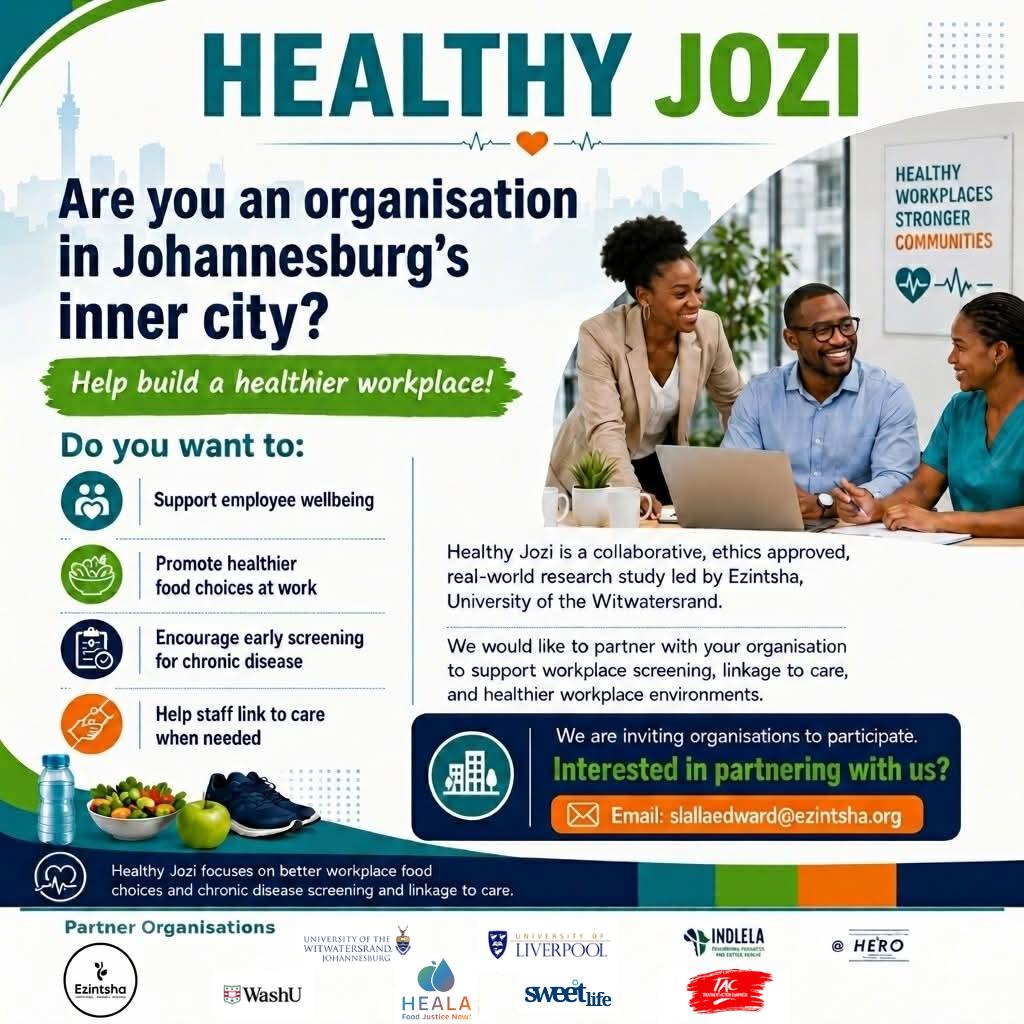
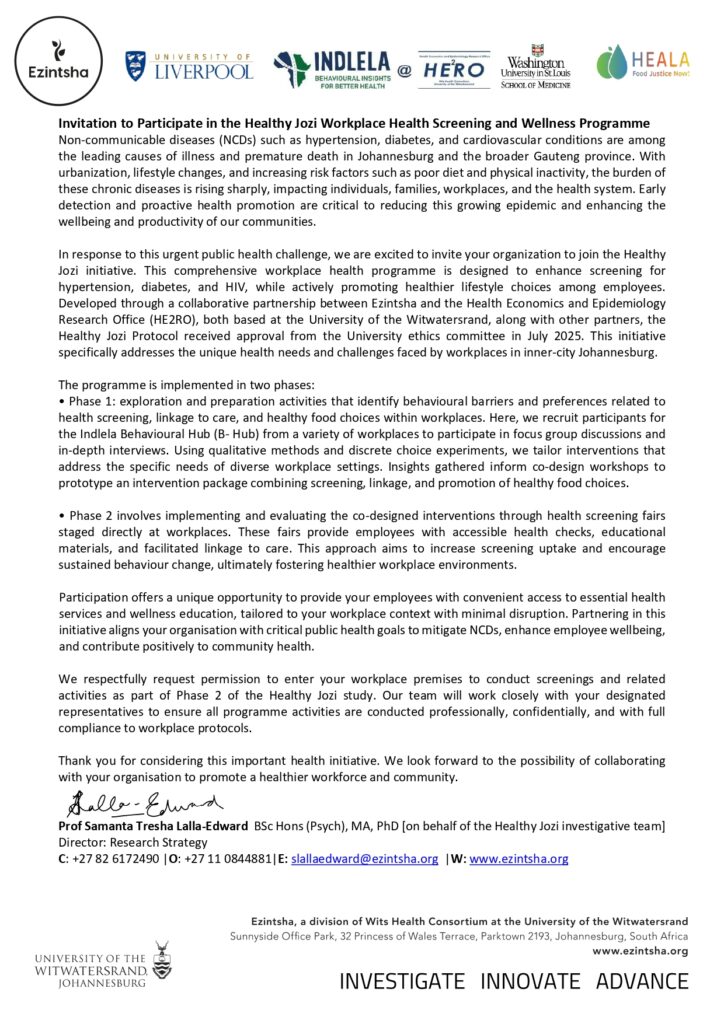
Invitation to Participate in the Healthy Jozi Workplace Health Screening and Wellness Programme
We live in a country where children can eat every day and still go hungry. This is the shocking reality facing many South African households today. Cheap, ultra-processed foods have become the most affordable and accessible option for struggling families.
This contradiction should alarm all of us.
According to UNICEF, around 23% of South African children live in severe food poverty. This means they consume food from only one or two food groups a day and are at significantly higher risk of malnutrition and developmental delays. At the same time, communities are seeing rising levels of childhood obesity, stunting and diet-related illness existing side by side. Furthermore, the percentage of overweight and obesity in children under 5 years rose from 13% in 2016 to 23% in 2024.
Availability of ultra-processed food
The proliferation of cheap, unhealthy ultra-processed food means that a small packet of crisps from a spaza shop or street vendor costs as little as R3–R5, while a single piece of fruit (a banana or apple) can cost the same or more at a formal retailer. A nutritious home-cooked meal for a child costs considerably more. For many families, the math is stark: ultra-processed snacks are cheaper, closer, and more readily available than fresh food.
In one neighbourhood I drive through regularly, children stop after school to buy brightly colored sweets, sugary drinks and cheap snacks from informal traders. Among them is a mother whose two young boys spend most days beside her, eating the same food she sells.
Across South Africa, millions of households are under immense economic pressure. Social grants remain a critical lifeline for many families, yet rising food prices, unemployment and inequality continue to push nutritious food further out of reach. For many households, the priority is no longer healthy eating; it is about survival.
This piece was published on the 19th of June by Health-e. Click HERE to read the full article.
Media Statement
For Immediate Release
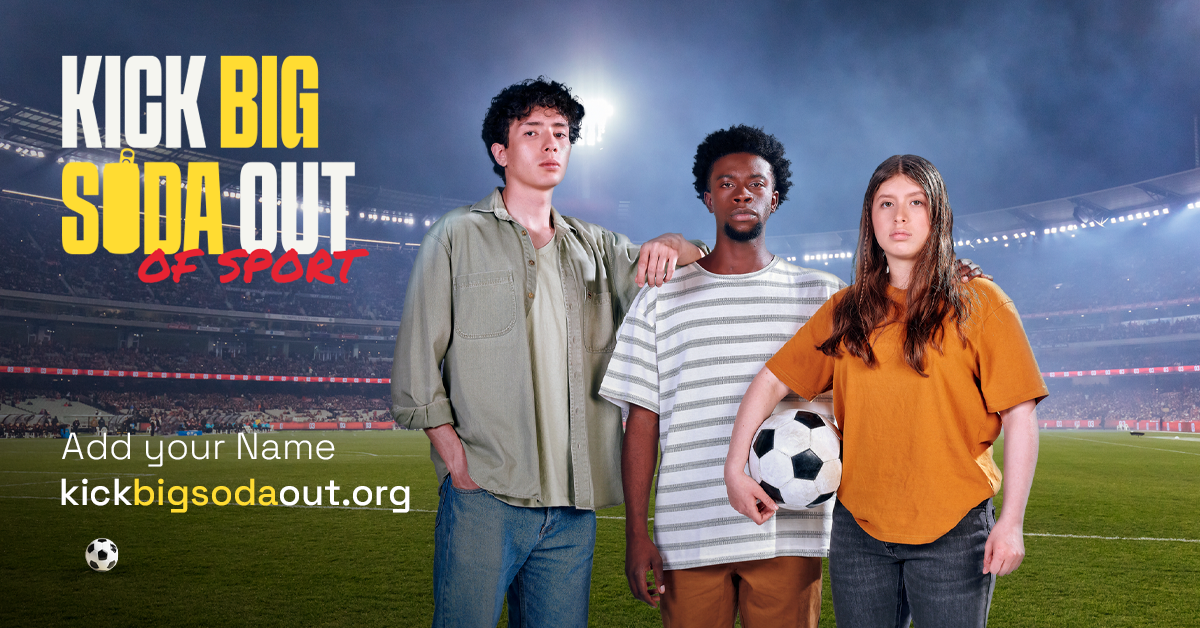
June 10, 2026 (Johannesburg) — A formidable coalition of global health experts and advocates is demanding FIFA commit to ending its partnership with Coca-Cola by 2030. The Kick Big Soda Out movement has targeted FIFA across major tournaments, where campaigners have accused Coca-Cola of sportswashing its health and environmental harms through stadium branding, broadcasts and social media. Despite sustained pressure, FIFA has failed to respond.
The tension is hard to ignore. Governments worldwide have introduced front-of-package warning labels and health taxes on sugary drinks — measures designed to protect public health and curb consumption of the very products Coca-Cola markets to millions of fans, especially children. FIFA’s commercial partnerships have long drawn scrutiny for the way they stand in direct opposition to these local health policies. Coca-Cola’s prominent presence at FIFA tournaments follows the same playbook — asking these same countries to spotlight one of the world’s biggest sweetened drink companies while sidelining regulations designed to protect public health.
“Sugary drinks are fuelling a global health crisis. Obesity, Type 2 diabetes and heart disease are rising at alarming rates, and Coca-Cola’s aggressive marketing is a driving force behind that. FIFA reaches five billion people through this World Cup and has a responsibility to those fans. Lending that platform to one of the world’s biggest sugary drink companies sends entirely the wrong message. That is exactly why we are demanding FIFA chooses differently, ” says Nomfundo Mbuli Programmes manager at the Healthy Living Alliance (HEALA).
Excess sugar consumption drives rising rates of obesity, Type 2 diabetes and heart disease. Big Soda’s aggressive marketing reaches millions, including children, influencing their preferences and purchases.
According to Mbuli “FIFA markets itself as a force for good for children, for communities, for the world. But you cannot champion the health of young people in one breath and sell their attention to the world’s biggest sugary drink company in the next. We are not asking FIFA to choose between football and health – we are asking them to choose both. This is FIFA’s moment to show that football truly belongs to the people – not to the corporations profiting from their ill health.”
Kick Big Soda Out has amassed over 523,000 supporters and the backing of 97 organizations since its launch during the 2024 Paris Olympics. The campaign’s ask is clear: FIFA must use the 2026 World Cup as a turning point, not another missed opportunity.
Join the movement demanding FIFA end its Coca-Cola partnership by 2030 at www.kickbigsodaout.org and use #KickBigSodaOutofSport to join the conversation.
Media Contact: Zukiswa Zimela, HEALA Communications Manager 0745210652 | zukiswa@heala.org
About HEALA: HEALA is a coalition of civil society organisations advocating for equitable access to affordable, nutritious food in South Africa by building a more just food system.